Showing posts with label Porsche. Show all posts

Sunday, July 26, 2020

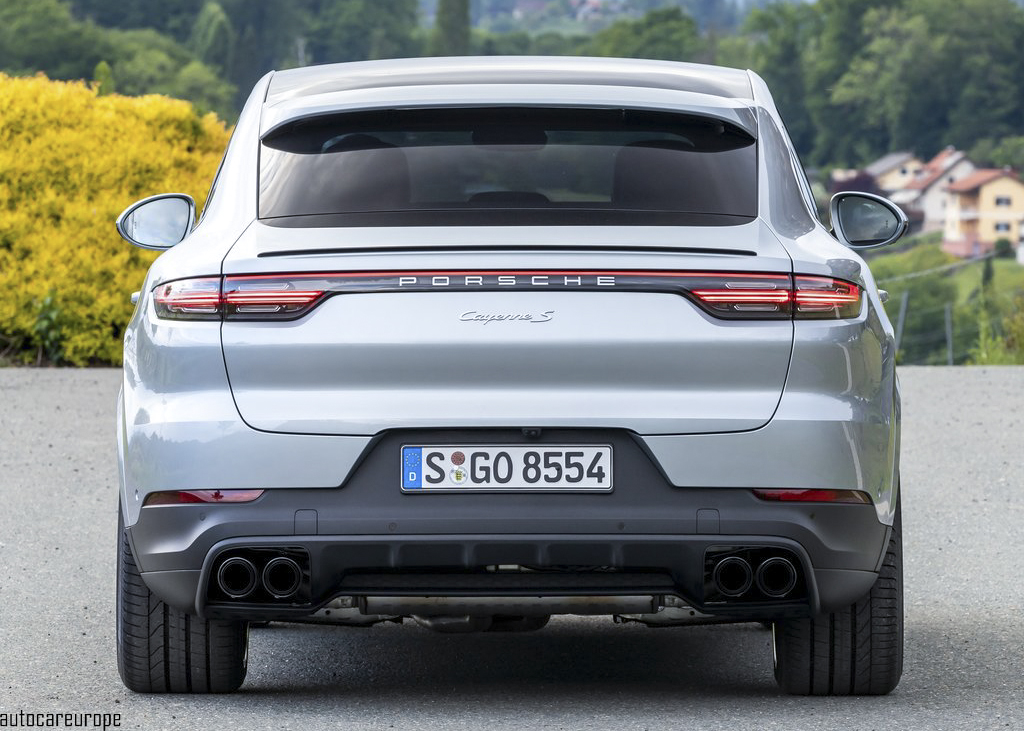
2020 Porsche Cayenne S Coupe Review


The Perfect Blend of Performance and Style: 2020 Porsche Cayenne S Coupe Review

The luxury crossover market saw a dramatic shift towards athletic, sloping rooflines, and few manufacturers executed this design direction better than Porsche. By blending the everyday utility of a midsize crossover with the aggressive silhouette of a fastback sports car, the 2020 Porsche Cayenne S Coupe emerged as one of the most compelling vehicles in its segment.

Positioned directly between the base model and the V8-powered Turbo, the 2020 Porsche Cayenne S Coupe hits the absolute sweet spot for driving enthusiasts. It delivers twin-turbocharged V6 power, razor-sharp handling, and an unmistakable road presence that turns heads wherever it goes.

1. Engine & Powertrain: Heart of a Twin-Turbocharged V6

Under the sculpted hood lies the true highlights of this athletic crossover:

  • Engine Architecture: 2.9-liter Twin-Turbocharged V6
  • Horsepower Output: 434 hp @ 5,700 – 6,600 rpm
  • Peak Torque: 405 lb-ft @ 1,800 – 5,500 rpm
  • Transmission: 8-speed Tiptronic S automatic transmission
  • Drivetrain: Active All-Wheel Drive (AWD)

Thanks to the Sport Chrono Package—which comes standard on the coupe variants—the 2020 Porsche Cayenne S Coupe launches from 0 to 60 mph in just 4.7 seconds (or 4.6 seconds with lightweight sport packages). Power delivery is immediate, with peak torque accessible right from 1,800 rpm, giving drivers effortless highway merging capabilities and crisp throttle response out of tight corners.

2. Exterior Design & Aerodynamics: A Sculpted Fastback

While it shares its underlying platform with the standard Cayenne, the 2020 Porsche Cayenne S Coupe sports distinct bodywork from the A-pillars back:

  • Rakish Roofline: The roofline sits roughly 0.78 inches lower than the standard SUV, sloping gracefully into a muscular rear fascia.
  • Adaptive Rear Spoiler: An active rear spoiler extends by 5.3 inches at speeds above 56 mph, creating additional downforce on the rear axle to enhance stability.
  • Panoramic Glass Roof: Comes standard as a fixed panoramic glass roof, flooding the cabin with natural light, though an optional contoured carbon-fiber roof is available for weight savings.

3. Driving Dynamics & Handling

Porsche’s engineering team worked tirelessly to ensure that the coupe body style lost none of the handling prowess for which the brand is legendary.

  • Porsche Active Suspension Management (PASM): Electronically adjusts damper forces based on road conditions and driving style, allowing you to switch seamlessly from plush highway cruising to firm track carving.
  • Rear-Axle Steering (Optional): Turns the rear wheels in opposition to the front wheels at low speeds for easier parking, while turning them in unison at high speeds for unflappable lane-change stability.
  • Braking Power: Equipped with massive vented steel disc brakes (or optional Porsche Surface Coated Brakes), ensuring consistent, fade-free stopping performance even under heavy thermal stress.

4. Interior Comfort, Tech & Practicality

Inside, the cabin strikes a harmonious balance between track-inspired ergonomics and modern digital luxury:

  • Porsche Advanced Cockpit: Features a central 12.3-inch HD touchscreen display for navigation, media, and vehicle settings, flanked by dual high-resolution digital displays in the instrument cluster.
  • Seating Configuration: Standard setup accommodates four passengers in a 2+2 layout with individual rear sport seats. However, a 2+1 rear seat configuration is available at no extra cost if you need room for five occupants.
  • Cargo Space: Despite the lower roofline, practical storage remains impressive:
    • 22.0 cubic feet of cargo space behind the second row.
    • 54.3 cubic feet with the rear seats folded flat.

5. Driver Assistance & Safety Tech

To support everyday usability, the vehicle features a broad array of active and passive safety technology:

  • Front and Rear ParkAssist with camera systems
  • Collision and Brake Assist
  • Lane Change Assist and Lane Keep Assist
  • Available Night Vision Assist (infrared camera detection)
  • Available Adaptive Cruise Control with stop-and-go technology

The Verdict: The Ultimate Sweet Spot in the Lineup

The 2020 Porsche Cayenne S Coupe proves that choosing a stylish fastback crossover does not mean compromising on genuine sports car performance or practical daily utility. With its 434-hp twin-turbo V6, athletic stance, and world-class chassis tuning, it remains one of the most rewarding performance crossovers on the market today.

💬 What are your thoughts on the 2020 Porsche Cayenne S Coupe? Do you prefer the sleek coupe roofline over the traditional SUV shape? Share your opinions in the comments section below!

Did you enjoy this review? Be sure to bookmark our blog and subscribe for more detailed automotive breakdowns, luxury car reviews, and performance buyer guides!

Saturday, September 16, 2017

2018-2019 Porsche Cayenne Turbo Details


2018-2019 Porsche Cayenne Turbo

With its reality debut at the 2017 International Motor Show in Frankfurt, the new Porsche Cayenne Turbo is having its spot at the head of the model line. The totally new head of-the-go model from the third era of the Cayenne is by and by increasing present expectations for lively execution in its portion. The four-liter V8 biturbo motor conveys 404 kW (550 hp). 

The expanded driving elements depend on the blend of creative advances, for example, dynamic optimal design including rooftop spoiler, controlled three-chamber air suspension, blended tires and the new elite brake. With extra choices, for example, back hub controlling or electric move adjustment with a 48-volt framework, the SUV can even accomplish the driving qualities of a genuine games vehicle. The new Cayenne Turbo quickens from zero to 100 km/h in 4.1 seconds (3.9 seconds with the Sport Chrono Package) and arrives at a maximum velocity of 286 km/h.


With a restrictive front end and the LED primary headlights of the Porsche Dynamic Light System (PDLS), the Porsche Cayenne Turbo has an appearance that is both predominant and free. Around evening time, the new Turbo separates itself from other Cayenne models with its twofold line front light modules. The side view is portrayed by standard 21-inch Turbo wheels extraordinarily held for the top model, in enlarged wheel curves with painted wheel curve trims. The twin tailpipes, explicit to the Turbo, are the key distinctive highlights on the backside. 

The entryway trims and back cover are painted in the outside shading. The totally new inside shows the expanded spread of the Cayenne Turbo: more energy and more solace simultaneously. For all intents and purposes all the vehicle elements of the completely arranged SUV can be shown and worked utilizing the high-goal show and touchscreen of the Porsche Advanced Cockpit. Among them, for instance, is the BOSE® Surround Sound System with 710 watts, fitted as standard. Drivers and travelers experience this head of-the-go model in sports seats with 18-way modification. The coordinated headrests are another element and are likewise suggestive of the 911. All seats and the multifunction sports guiding wheel in an elite Turbo configuration are warmed as standard.


Greater power, greater torque: biturbo eight-cylinder with 550 hp

At the heart of the Porsche Cayenne Turbo is the new four-litre V8 engine with twin turbocharging. With an output of 404 kW (550 hp), it exceeds the engine of its predecessor by 22 kW (30 hp), while the maximum torque of 770 Nm represents an increase of 20 Nm. The new eight-speed Tiptronic S converts both into acceleration and speed by means of the active all-wheel drive Porsche Traction Management (PTM). The new Turbo sprints to 100 km/h in 4.1 seconds (3.9 seconds with the Sport Chrono Package) and reaches a top speed of 286 km/h.

 As is trademark for new motor ages, the fumes turbochargers are masterminded inside the chamber V, in the "focal turbo format". The abbreviated fumes ways between the burning chambers and the turbochargers imply that the motor is particularly responsive, while the focal turbo format brings about altogether improved force conveyance. Another favorable position is the smaller development of the motor. This empowers a lower establishment position, which positively affects the driving elements: The focal point of gravity is lower and the cornering accuracy is higher.


The new lightweight skeleton of the Cayenne Turbo consolidates the best of three universes: the accuracy of a games vehicle, the solace of a cantina and the flexibility of a rough terrain vehicle. Specifically, the mix of the new three-chamber air suspension with the dynamic safeguard framework PASM expands the range extensively. The idea of the new blended tires in with standard components of 285/40 at the front and 315/35 at the back originates from sports vehicle development and delivers far superior longitudinal and horizontal force transmission. 

Three air chambers for each spring swagger are utilized in the versatile air suspension structure, thusly the case can plan diverse spring rates. With six selectable stature levels, the ground freedom can be physically acclimated to suit the rough terrain landscape. They are likewise effectively controlled by means of five new driving projects for street travels and rough terrain ventures. Supplemented by discretionary back hub controlling, the electric Porsche Dynamic Chassis Control (PDCC) move adjustment associated with a 48-volt vehicle electrical framework and Porsche Torque Vectoring Plus (PTV+), the new Cayenne Turbo accomplishes the driving elements of a games vehicle. Simultaneously, its regular appropriateness as far as stopping and turning moves is improved, just like the solace level.

The new Porsche Cayenne Turbo is the principal SUV to have a versatile rooftop spoiler as a part of its dynamic streamlined features. Contingent upon the position, this improves effectiveness, increments downforce on the back pivot and, in the airbrake position, abbreviates the slowing down good ways from higher velocities. At full slowing down from 250 km/h, the SUV grinds to a halt up to two meters prior accordingly. The streamlined framework in this way supplements the impact of the new superior Porsche Surface Coated Brake (PSCB) which deals with deceleration in the Cayenne Turbo as standard. The tungsten carbide layer applied to the steel circles increments slowing down execution and protection from wear while diminishing the measure of brake dust simultaneously, which means less earth on the edges. The top framework in the program remains the discretionary Porsche Ceramic Composite Brake (PCCB).

The new Porsche Cayenne Turbo is available to order now, with the market launch in Europe scheduled for the end of 2017. In Germany, the top model of the SUV model line costs EUR 138,850 including VAT and country-specific features.


My general point : 9,75/10

My point to exterior design : 9,75/10
point to interior design : 9,75/10
point to front bumper : 9,5/10
point to rear bumper : 9,75/10
point to headlight : 9,75/10
point to rearlights : 10/10


Thursday, August 10, 2017

2018-2019 Porsche 911 GT2 RS Details


2018-2019 Porsche 911 GT2 RS

The fastest and most powerful road-approved 911 is ready for launch: The new Porsche 911 GT2 RS celebrated its world premiere at the 2017 Goodwood Festival of Speed in the UK. At the heart of this high-performance sports car is a 515 kW (700 hp) biturbo flat engine. Weighing in at 1,470 kg with a full fuel tank, the lightweight two-seater accelerates from zero to 100 km/h in 2.8 seconds. The rear-wheel drive Coupé has a top speed of 340 km/h, and with its near-motorsport drive technology, the new Porsche 911 GT2 RS trumps its 3.6-litre predecessor by 59 kW (80 hp) and achieves a torque of 750 Newton metres (an increase of 50 Nm).


The engine builds on that 3.8-litre in the 911 Turbo S at 427 kW (580 hp). In order to increase performance, large turbochargers push an increased volume of process air into the combustion chambers. A new additional cooling system delivers optimum cooling at peak loads and, at very high temperatures, sprays the charge-air cooler with water. This causes the gas temperature to fall in the overpressure range and ensures optimum power output, even under extreme conditions. The customised GT seven-speed double-clutch transmission (PDK) in the new GT2 RS enables power to be transferred with uninterrupted traction. What's more, the specially developed exhaust system is made from extra-lightweight titanium, weighs around seven kilograms less than the system used in the 911 Turbo and delivers an emotional sound without precedent.


Speaking of price, the 2018 GT2 RS is very obviously not cheap. Arriving at dealers in early 2018, the GT2 RS will set you back a cool $293,200, which doesn't include $1,050 for delivery and processing. Better start looking under your mattresses for spare change.


My general point : 9,7/10

My point to exterior design : 9,75/10
point to interior design : 9,25/10
point to front bumper : 9,75/10
point to rear bumper : 10/10
point to headlight : 9,5/10
point to rearlights : 10/10


2018-2019 Porsche 911 GT3 Details


2018-2019 Porsche 911 GT3

The 911 GT3 is pure Porsche. It bridges the gap between motorsport and road driving, truly reflecting the core of the brand: successful on the race track, reliable in daily life. The new Porsche 911 GT3 strikes the balance like almost no other. This is all thanks to the completely new, six-cylinder naturally aspirated engine with 368 kW (500 hp), the high-speed engine concept, the revised chassis with near-motorsport tuning and the systematic lightweight construction. With a four-litre flat engine, the 911 GT3 generates its power using the same engine as the thoroughbred 911 GT3 Cup racing car.

 Developed on the same test track and manufactured on the same production line as the racing car, Porsche's motorsport technology has once again been incorporated into a road-approved sports car. As a result, Porsche's most successful GT sports car delivers an emotional mix of high performance and unfiltered driving feel.


            Manual                                        PDK

 Horsepower 500 hp at 8250 rpm            500 hp at 8250 rpm

        0 - 60 mph 3.8 sec                              3.2 sec

    Top Track Speed 198 mph                       197 mph

Fuel Consumption City TBD mpg                TBD mpg

           Highway TBD mpg                            TBD mpg

               MSRP From $ 143,600.00                 From $ 143,600.00


High-speed racing engine producing 368 kW (500 hp)

At the heart of the new 911 GT3 beats a thoroughbred motor racing engine. The main development aims for the high-speed engine were performance and stability for heavy use on racing circuits. The naturally aspirated six-cylinder flat engine with four-litre displacement generates extremely dynamic power in the 911 RSR, as well as the 911 GT3 R and 911 GT3 Cup. The machine is the most powerful naturally aspirated direct-injection engine and has the greatest displacement that Porsche has ever produced for a six-cylinder flat engine on the road. It produces 368 kW (500 hp) of power and 460 Nm of torque. This represents an increase of 25 hp and 20 Nm when compared to the previous model with 3.8-litre displacement. The power curve peaks at 8,250 rpm, while maximum torque is achieved at 6,000 rpm.


My general point : 9,6/10

My point to exterior design : 9,5/10
point to interior design : 9,5/10
point to front bumper : 9,5/10
point to rear bumper : 9,75/10
point to headlight : 9,25/10
point to rearlights : 10/10


2018-2019 Porsche 911 GTS Details


2018-2019 Porsche 911 GTS

Porsche has expanded the 911 product line with the GTS models. From March 2017, a total of five variants will be available in Germany: the 911 Carrera GTS with rear-wheel drive, the 911 Carrera 4 GTS with all-wheel drive - both of the above availa-ble as a Coupé and Cabriolet - and the 911 Targa 4 GTS with all-wheel drive. A newly developed turbocharger for 3.0-litre six-cylinder flat engine increases power to 331 kW (450 PS). The engine delivers 22 kW (30 hp) more than the 911 Carrera S and 15 kW (20 hp) more than the corresponding GTS prior model with a naturally aspirated engine. All variants are available with a manual seven-gear transmission or optional Porsche Doppelkupplung (PDK).


The maximum torque of 550 Nm provides even better acceleration and elasticity figures. The torque is available between 2150 and 5000 rpm. Porsche Active Suspension Management (PASM) is included as standard on all GTS models. The GTS Coupés feature the PASM sports chassis, which lowers the body by ten millimetres. The fastest sprinter in the family is the 911 Carrera 4 GTS Coupé: With Porsche Doppelkupplung (PDK) and the Sport Chrono Package as standard, it races from zero to 100 km/h in 3.6 seconds. All GTS models feature a top speed in excess of 300 km/h. The frontrunner at 312 km/h is the Coupé with manual transmission and rear-wheel drive.

Despite the increase in performance, the GTS remains efficient - the 911 Carrera GTS with PDK, for example, consumes only 8.3 l/100 km according to the NEDC. This corresponds to CO2 emissions of 188 g/km.


The 911 GTS models are available to order now; including value-added tax and country-specific equipment, prices in Germany are as follows:

-911 Carrera GTS-124,451 euros
-911 Carrera 4 GTS-131,829 euros
-911 Carrera GTS Cabrio-137,541 euros
-911 Carrera 4 GTS Cabrio-144,919 euros
-911 Targa 4 GTS-144,919 euros


My general point : 9,6/10

My point to exterior design : 9,75/10
point to interior design : 9,25/10
point to front bumper : 9,75/10
point to rear bumper : 9,75/10
point to headlight : 9,25/10
point to rearlights : 10/10


2018-2019 Porsche Panamera Sport Turismo Details

                                                                   Porsche is a monster :D


2018-2019 Porsche Panamera Sport Turismo

Porsche is expanding the Panamera family with the addition of a new body version: The Porsche Panamera Sport Turismo is celebrating its world première at the 2017 Geneva Motor Show, where five different versions will be on display: Panamera 4, Panamera 4S, Panamera 4S Diesel, Panamera 4 E-Hybrid and Panamera Turbo. 

Based on the successful sports saloon, the new version once again makes a profound statement in the luxury segment with its unmistakeable design. At the same time, the Sport Turismo, with up to 404 kW/550 hp, is more versatile than any other model in its class.

 With a large tailgate, low loading edge, increased luggage compartment volume and a 4+1 seating concept, the new Panamera model offers the perfect combination of everyday usability and maximum flexibility. "For Porsche, the Panamera Sport Turismo is a step forwards into a new segment, but retains all of those values and attributes that are characteristic of Porsche", says Michael Mauer, Director of Style Porsche.


Technical Details :

The range starts with the $97,250 Panamera 4, which delivers 330 horsepower from a single-turbo 3.0-liter V-6. Another $13,000 buys the 440-hp twin-turbo 2.9-liter V-6 of the 4S Sport Turismo. Our drive gave us seat time in the Panamera 4 E-Hybrid (a plug-in vehicle with a 14.0-kWh lithium-ion battery) and the $155,050 Turbo with its twin-turbo 4.0-liter V-8 making 550 horsepower.


The Panamera’s chassis dynamics are indifferent to the powertrain that is installed, however. Both versions we drove (along with non–Sport Turismo variants we’ve previously driven) delivered perfectly weighted steering, nicely controlled body roll, and a firm ride that is never flinty, choppy, or abrupt. Our sole complaint concerns the $105,050 E-Hybrid, where it is a challenge to modulate the braking force, with a vague transition between regenerative braking and the conventional friction pads.


A sporty $100,000 wagon exists within a niche of a niche of a niche. And the niche that the Sport Turismo resides in is remarkably similar to the space carved out by the standard Panamera. That doesn’t appear to be much of a concern within Porsche, however. This brand loves to dream up every conceivable variation and leave the hard decisions to the buyers.


My general point : 9,6/10

My point to exterior design : 9,5/10
point to interior design : 9,5/10
point to front bumper : 9,75/10
point to rear bumper : 9,25/10
point to headlight : 9,75/10
point to rearlights : 10/10


Thursday, August 3, 2017

2018-2019 Porsche Panamera Turbo S E-Hybrid Details


2018-2019 Porsche Panamera Turbo S E-Hybrid

Porsche continues to achieve high levels of performance over the long term. The new Porsche Panamera Turbo S E-Hybrid sees the sportscar manufacturer launch a plug-in hybrid model as the flagship of a model line for the first time. The four-litre V8 engine from the Panamera Turbo is combined with an electric motor, resulting in 500 kW/680 hp of system power and outstanding power delivery: Even when just above idle speed, the Panamera Turbo S E-Hybrid offers an 850 Nm of torque. That means it accelerates from zero to 100 km/h in 3.4 seconds and reaches a top speed of 310 km/h. The boost strategy of the all-wheel drive Panamera comes from the 918 Spyder super sportscar. In the New European Driving Cycle, the average fuel consumption is 2.9 l/100 km, and the new flagship Panamera can drive on fully electric power for up to 50 kilometres. The Panamera Turbo S E-Hybrid underlines the high importance of electromobility to Porsche.


After the successful début of the Panamera 4 E-Hybrid, which uses a V6 engine together with an electric motor, Porsche is showing once again that hybrid technology has great performance potential. The new Porsche Panamera Turbo S E-Hybrid combines an electric motor (100 kW/136 hp) with a V8 engine (404 kW/550 hp). The decoupler installed in the Porsche hybrid module is actuated electromechanically by an electric clutch actuator (ECA), just like in the Panamera 4 E-Hybrid. The result is short response times and a high level of comfort. As in all other second-generation Panamera models, the fast-shifting Porsche Doppelkupplung (PDK) with eight gears is used to transmit the power to the standard adaptive all-wheel drive system Porsche Traction Management (PTM). The E-Performance drive accelerates the luxury saloon to 100 km/h in just 3.4 seconds and provides extraordinary tractive force at higher speeds. Combined with a top speed of 310 km/h, this means that the Porsche Panamera Turbo S E-Hybrid sets yet more new benchmarks in its class. The Panamera Turbo S E-Hybrid comes with air suspension as standard and offers a unique balance in this segment: the comfort of a luxury saloon paired with sportscar-level performance values.


The electric motor is supplied with power via a liquid-cooled lithium-ion battery with an energy capacity of 14.1 kWh. Within six hours, the high-voltage battery integrated in the rear is fully charged with 10 A via a 230-V connection. If the Panamera uses the optional 7.2-kW on-board charger and a 230-V connection with 32 A instead of the standard 3.6-kW charger, the battery is fully charged in just 2.4 hours. The charging process can also be started using a timer via Porsche Communication Management (PCM) or the Porsche Connect app (for smartphones and Apple Watch). Moreover, the Panamera Turbo S E-Hybrid is fitted with auxiliary air conditioning to cool or heat the passenger compartment even during charging.


Performance, comfort and efficiency form a perfect three-way combination: The Porsche Panamera Turbo S E-Hybrid starts in the purely electric "E-Power" mode as standard, and the four-door sportscar drives locally over a distance of up to 50 kilometres with zero emissions. When a specific pressure point is passed in the accelerator pedal, or when the battery charge level drops below a minimum value, the Panamera switches to "Hybrid Auto" mode, at which point the power of both engines is available. Consumption in the New European Driving Cycle (NEDC) for plug-in hybrid models amounts to 2.9 l/100 km for super-grade petrol (66 g/km of CO2) and 16.2 kW/h/100 km for electric power.


As part of its standard equipment, the Porsche Panamera Turbo S E-Hybrid includes the Porsche Ceramic Composite Brake (PCCB), Porsche Dynamic Chassis Control Sport (PDCC Sport) including Porsche Torque Vectoring Plus (PTV Plus), Power Steering Plus and 21-inch alloy wheels in the 911 Turbo Design. The basic package also contains auxiliary air-conditioning, adaptive aerodynamic elements and three-chamber air suspension including Porsche Active Suspension Management (PASM). The long version is equipped with rear axle steering as standard. In Germany, prices for the Porsche Panamera Turbo S E-Hybrid start at EUR 185,736 including VAT. For the Porsche Panamera Turbo S E-Hybrid Executive, prices start at EUR 199,183.