Thursday, October 8, 2026

2026 Toyota Raw 4


  • Toyota RAV4
  • ​The sixth-generation Toyota RAV4 builds on its 30-year legacy (over 15 million sales globally across 180 countries, and 2.5 million in Europe) with a bold redesign, enhanced technologies, and Toyota’s first implementation of the new Arene software platform.
  • ​Exterior Design

  • ​Front & Rear: Features a 3D SUV hammerhead front design, contoured hood, new slim LED headlights with integrated indicators (and Adaptive High Beam System on higher trims), and integrated rear LED signature lights.
  • ​Side Profile & Wheels: Sculpted side surfaces with wide rear wheel arches. Available with new 18-inch and 20-inch wheels in metallic grey, black, and machined metal.
  • ​Colors: Includes Warm Stone, Forest Green, Urban Shadow, and Avantgarde Bronze, alongside an optional bi-tone roof with black A-pillars.
  • ​Interior & Digital Cockpit
  • ​Cabin Layout: Lowered dashboard top (by ~40 mm) for better visibility, white ambient lighting, and fully foldable rear seats. Standard power tailgate with hands-free kick-sensor on higher trims.
  • ​Displays & Tech: Features a free-standing 12.3-inch digital instrument cluster, a 12.9-inch multimedia touchscreen, and an upgraded Head-Up Display (HUD) (more than double the previous size, projecting 4–6 meters ahead).
  • ​Charging & Storage: High trim includes two wireless chargers and two 45 W USB ports in front (3x faster than standard 15 W ports). Mid and High trims add three USB ports in the rear (5 total).
  • ​Arene Platform & Safety: Offers 4x faster processing and 8x more storage. Powered by Toyota Safety Sense (including Blind Spot Monitor, Rear Vehicle Approaching Indicator, Front Cross Traffic Alert, Lane Change Assist, Pre-Collision System, and Secondary Collision Brake). Includes Smart Digital Key+, Drive Recorder, Remote Locking, and Remote Park.
  • ​Driving Dynamics
  • ​Platform: Built on an enhanced TNGA-K platform, delivering 9.7% higher overall body rigidity (front suspension connection points up by 31%, rear by 27%).
  • ​Control Systems: Features electronic brake control, Vehicle Braking Posture Control (VBPC), Cooperative Steering Drive Force Control (CSDFC), and Downhill Assist Control (standard on HEV/PHEV AWD).
  • ​Towing: AWD versions offer a 2,000 kg towing capacity.
  • ​Next-Generation PHEV (Plug-in Hybrid)
  • ​Powertrain: 2.5-liter system featuring a 22.68 kWh lithium-ion battery (+30% capacity, +8% output) and a 150 kW front motor (+16 kW). Available in FWD and AWD-i.
    • ​AWD Output: 309 DIN hp (0–100 km/h in 5.8 seconds)
    • ​FWD Output: 272 DIN hp
  • ​EV Range: Up to 137 km (WLTP combined cycle). Includes a geofencing function to automatically manage EV/HEV modes for Low Emission Zones.
  • ​Charging Rates:
    • ​50 kW DC Fast Charging: 10% to 80% in 30 minutes.
    • ​11 kW AC On-Board Charger: Full charge in 3 hours.
  • ​Latest Hybrid (HEV) Technology
  • ​Powertrain: 2.5-liter hybrid engine with 221 Nm of torque, powered by a smaller, lighter lithium-ion battery pack.
    • ​AWD Output: 194 DIN hp
    • ​FWD Output: 185 DIN hp
  • ​Fuel Economy: Down to 5.8 L/100 km (WLTP combined).
  • ​GR SPORT Trim
  • ​Design: Features a 3D G-mesh front grille, 20 mm wider overall track, 12.5 mm wider front wheel arches, and lightweight 20-inch black alloy wheels.
  • ​Performance Enhancements: Includes high-performance front dampers, custom suspension tuning with higher damping force, reinforced rear suspension support, and specially tuned electronic power steering. Interior features synthetic leather/suede seats with red accents and aluminum pedals.

Saturday, October 3, 2026

2018-2019 Ford Fiesta ST Diesel Details


2018-2019 Ford Fiesta ST Diesel

Pocket Rocket Redefined: 2018 Ford Fiesta ST – Performance, Design & Chassis Dynamics

​The 2018 Ford Fiesta ST stands as one of the most celebrated benchmarks in the modern hot hatch segment. Combining a high-tech three-cylinder powertrain with class-leading chassis engineering and a aggressive silhouette, Ford delivered a compact performance car that balances thrilling track capability with daily driving practical usability.

​Key Technical Specifications

​At the core of the Fiesta ST is a 1.5-liter EcoBoost engine, featuring cylinder deactivation technology—a world-first for a three-cylinder performance motor—delivering exceptional power without compromising fuel efficiency.

Sculpted Exterior Design & Aerodynamics

​Visually, the 2018 Fiesta ST distinguishes itself from standard Fiesta models through a series of purposeful, aerodynamic design cues:

  • ​Aggressive Front Fascia: Features an ST-specific honeycomb mesh front grille optimized to increase airflow to the intercooler while establishing an assertive road presence.
  • ​Aerodynamic Body Kit: Sculpted side skirts and a functional rear roof spoiler work in harmony to reduce lift and enhance high-speed stability.
  • ​Active Exhaust Valve Technology: The twin rear exhaust pipes feature an Active Exhaust Valve that amplifies the natural, raspy 3-cylinder engine note in sportier drive modes.

​Benchmark Handling & Chassis Engineering

​The legendary status of the Fiesta ST stems directly from its advanced suspension architecture and cornering agility:

  • ​Quaife Mechanical Limited-Slip Differential (LSD): Available as part of the optional Performance Pack, the Quaife LSD distributes engine torque to the wheel with the most grip, virtually eliminating understeer during hard cornering.
  • ​Patented Force Vectoring Springs: Ford’s directional vectoring springs apply vectoring forces directly to the rear suspension, providing sharper turn-in responsiveness and heightened rear-end agility.
  • ​Selectable Drive Modes: Drivers can toggle between Normal, Sport, and Track modes to instantly adjust throttle response, steering weight, and electronic stability control (ESC) intervention levels.

​Driver-Centric Interior & Connectivity

​Inside the cabin, the Fiesta ST creates an engaging cockpit environment paired with modern connectivity features:

  • ​Recaro Performance Seats: Heavily bolstered Recaro sports seats keep driver and passenger firmly planted during high-G cornering maneuvers.
  • ​SYNC 3 Infotainment: Equipped with a high-resolution touchscreen featuring voice control, Apple CarPlay, and Android Auto integration, keeping drivers connected with minimal distraction.
  • ​Advanced Driver Assistance: Features such as Lane-Keeping Aid, Traffic Sign Recognition, and Auto High-Beam assist make the ST a complete everyday driver.

2018-2019 Ford Fiesta ST Diesel

2018-2019 Ford Fiesta ST Diesel

2018-2019 Ford Fiesta ST Diesel

2018-2019 Ford Fiesta ST Diesel


2018 Toyota C-HR [US]


2018 Toyota C-HR [US] 

First shown in concept form at the 2014 Paris Motor Show, the 2018 C-HR maintains the concept's avant-garde physique; modern, comfortable cabin; and bold, outgoing character. The C-HR is available in two grades, XLE and XLE Premium, each equipped with a long list of standard features that includes 18-inch alloy wheels, dual-zone climate control, bucket seating, and 7-inch audio display.

But, the Toyota C-HR doesn't only look great - it's got the sportiness to impress thanks to the efforts of Deputy Chief Engineer, Hiro Koba, who is a diehard racer with speed coursing through his veins. Koba-san and team made sure the C-HR exhilarates its driver anytime, anywhere, including around the famed Nürburgring circuit where vehicle development was chiefly executed. Like its uncanny looks, the C-HR's blend of comfort, control, consistency, and responsiveness is extraordinarily impressive for the competitive paradigm it aims to shift.


At the Toyota C-HR's nose, two slim projector-beam halogen headlights with LED daytime running lights (DRL) and auto-on/off activation wrap deep into its toned shoulders - nearly all the way into the front quarter panels. Because of this, the vehicle looks wider than it is, and possesses an assertive fascia that's uncommon in the segment. In fact, its dimensions - width (70.7 in.), height (61.6 in), length (171.2 in.), and wheelbase (103.9 in.) - can best be described as compact and neat. Its front and rear tracks match that of Toyota's diehard sports car, 86, at 60.6 inches.


Along with the weight, there’s the matter of the CVT. Not all CVTs are bad these days, but this one is a throwback to when they were. In-gear acceleration, like passing, is painfully slow. If it hits 60 mph in less than 10 seconds, I’ll demand a recount. If you’re trying to find a hole in traffic, you’ll step on the gas, count two, listen to the engine wind up to 5,000 rpm, count another two, then feel the car begin to accelerate—slowly.


Responsibility lies at the feet of the powertrain, which is undersized and overstressed. The all-new 2.0-liter four-cylinder makes just 144 hp and 139 lb-ft of torque, which might be OK in a Mazda CX-3. But the front-drive C-HR weighs 300 pounds more than an all-wheel drive CX-3. How and why a vehicle this small weighs 3,300 pounds is a mystery, but regardless of where it comes from, it’s an albatross.


Saturday, August 1, 2020

2019 Lamborghini Urus Review


​A Supercar-Bred Monster: 2019 Lamborghini Urus Review

​What happens when the legendary creator of the world's most aggressive supercars decides to build a high-riding, five-door family cruiser? While it might sound like a clash of concepts on paper, in reality, it birthed one of the most thrilling vehicles in automotive history: the Lamborghini Urus.

​Sharing its core architecture with the Audi Q7, Bentley Bentayga, and Porsche Cayenne, can this 2.2-ton titan truly retain the soul of a Italian supercar? As a pivotal vehicle designed to double Lamborghini's annual production, we dive deep into whether the Urus delivers on its "Super SUV" promise.

​Driving Dynamics: Physics-Defying Engineering

​Purists might feel a slight sting knowing there is no screaming naturally aspirated V10 or V12 under the hood. However, make no mistake: the 4.0-liter twin-turbo V8 is a powerhouse substitute. Pumping out 641 hp and 627 lb-ft of torque starting at just 2,250 rpm, it delivers relentless, rib-crushing acceleration through its eight-speed automatic gearbox whenever you flex your right foot.

​Mass-Concealing Tech

​Tossing a two-ton, high-riding vehicle into corners shouldn't feel this effortless. Lamborghini loaded the Urus with cutting-edge tech designed to bend the laws of physics:

  • ​Rear-Wheel Steering: Rotates the rear wheels by up to 3 degrees—shortening the virtual wheelbase for tight parking and sharp turns at low speeds, while offering rock-solid stability during high-speed cornering.
  • ​Active Roll Stabilization: Keeps the body flat through aggressive turns by counteracting body roll, practically erasing the higher center of gravity.
  • ​Torsen Central Differential & Torque Vectoring: Intelligently powers the outside rear wheel to drive you out of corners without relying on braking intervention.
  • ​Carbon-Ceramic Brakes: Featuring the largest brake discs ever fitted to a production car, providing immense stopping power to bring 2.2 tons down from high speeds securely.

​The ANIMA Driving Modes

​The Urus adapts to almost any surface via its ANIMA selector:

  • ​On-Road: Strada (Street/Comfort), Sport (Dynamic), and Corsa (Track mode, dropping air suspension by 15mm for maximum attack).
  • ​Off-Road: Terra (Dirt), Sabbia (Sand), and Neve (Snow)—which lift the air suspension by 40mm to clear rough terrain.
  • ​Ego Mode: Allows you to individually customize steering weight, powertrain aggressiveness, and suspension stiffness.

​Interior: Luxury Meets Aviation Design

​Despite its sloping coupe-like roofline (sitting 100mm lower than an Audi Q7 or Bentayga), interior space remains surprisingly generous.

  • ​Comfort & Utility: Rear passengers enjoy ample headroom and legroom, complemented by a practical 616-liter trunk (expanding to 1,596 liters with the rear seats folded).
  • ​Jet Cockpit Ergonomics: Sitting low inside the cabin rather than perched on top, the driver is surrounded by Lamborghini’s signature hexagonal motifs, Alcantara, and aircraft-inspired switchgear—including the red flip-cover start button.
  • ​Tri-Screen Setup: Lifted from the modern Audi architecture, the dual center touchscreens handle infotainment, climate control, and digital handwriting inputs effortlessly alongside the digital driver instrument cluster.

​Everyday Usability & Ownership

​Lamborghini claims the Urus is its most fuel-efficient vehicle ever, thanks to a cylinder deactivation system that shuts down four cylinders under light loads (below 3,000 rpm).

​While it remains a thirsty machine—as expected from a twin-turbo V8—the large 85-liter fuel tank provides a realistic touring range of over 400 miles (600+ km) between fill-ups. Crucially, in Strada mode, it behaves like a civil family cruiser capable of handling daily errands and long-distance road trips with complete ease.

​Verdict: The Pinnacle of the Super SUV

​The 2019 Lamborghini Urus seamlessly bridges the gap between raw supercar excitement and everyday family practicality. It doesn't just wear the Raging Bull badge—it earns it through astonishing speed, sharp dynamics, and unmistakable Italian design.

​📌 You Might Also Like: Interested in Lamborghini's track-focused legend? Check out our detailed review of the Huracán Performante right here on the blog!


​What are your thoughts on the Lamborghini Urus? Would you choose it over a traditional supercar? Let us know in the comments below!


Thursday, July 30, 2020

2017 sports cars


2017 SPORTS CARS


2017 Lamborghini Aventador


2017 Chevrolet Camaro SS


2017 Subaru WRX


2017 Subaru BRZ


2017 Mazda MX-5


2017 Fiat 124 Spider 


2017 Ferrari 488 GTB

The Legend-Makers: A Deep Dive Into the Best 2017 Sports Cars

The year 2017 was a watershed moment for performance enthusiasts. From raw Italian V12 masterpieces to nimble Japanese roadsters and muscle-bound American icons, the automotive landscape was stacked with dream machines.

Let’s take a look back at some of the most defining sports cars and supercars that dominated the headlines, tracks, and winding roads in 2017.

1. 2017 Lamborghini Aventador S: The Raging Bull Evolves

When the Aventador debuted in 2011, it stunned the world with its carbon tub, sharp angles, and screaming V12. Fast forward to 2017, and Lamborghini refined the formula to keep the competition at bay with the Aventador S.

  • Performance & Handling: Powered by an upgraded 6.5-liter V12 cranking out 740 horsepower, the Aventador S rockets to 62 mph in just 2.9 seconds. The big game-changer for the "S" model is the introduction of four-wheel steering, drastically improving agility at low speeds and rock-solid stability at its breathtaking 217 mph top speed.
  • The Cabin: Stepping inside is pure theater with upward-opening scissor doors and a jet-fighter-inspired digital cockpit. While it retains its quirky single-clutch automated gearbox, the sheer drama, visceral V12 soundtrack, and aggressive styling make it an unforgettable experience.

2. 2017 Chevrolet Camaro SS & ZL1: American Muscle Meets Precision

Gone are the days when muscle cars could only go fast in a straight line. The 2017 Chevy Camaro matured into a world-class performance machine.

  • The Lineup: Whether you opt for the 335-hp V6, the 455-hp V8-powered SS, or the monstrous supercharged V8 ZL1 pumping out 650 hp, the Camaro delivers supercar-rivalling track capabilities at a fraction of the price.
  • Tech & Comfort: Alongside manual and rapid automatic transmission options (including a 10-speed on the ZL1), the cabin is packed with 21st-century tech like standard 4G LTE Wi-Fi and touchscreen infotainment.

3. 2017 Subaru WRX & BRZ: The Japanese Icons

Subaru offered two very different flavors of driving fun in 2017 for enthusiasts on a budget.

  • WRX: Packing a 268-hp turbocharged boxer-four and legendary symmetrical all-wheel drive, this practical four-door rockets from 0-60 mph in 4.8 seconds while retaining real trunk and back seat space.
  • BRZ: Going the opposite route, the BRZ features a lightweight, rear-wheel-drive layout with a naturally aspirated 2.0-liter boxer engine. It may only have 205 horsepower, but its chassis balance makes it one of the purest, most rewarding dance partners on a twisty road.

4. 2017 Mazda MX-5 Miata & Fiat 124 Spider: The Open-Top Purest Choices

Proving you don't need hundreds of horsepower to have fun, the Mazda MX-5 Miata remained the gold standard for lightweight roadsters. Weighing around 2,400 pounds with 155 hp, its delicate controls and agile handling offer unmatched smiles per dollar. For 2017, Mazda also introduced the stylish retractable fastback hardtop, the Miata RF, giving buyers a sleek alternative. (Its Italian sibling, the Fiat 124 Spider, offered similar drop-top thrills with a distinct turbocharged flair).

5. 2017 Ferrari 488 GTB: The Benchmark Driver's Car

Evolving from the legendary 458 Italia, the Ferrari 488 GTB proved that turbocharging could coexist with pure driving emotion.

  • The Engine & Aero: Its 3.9-liter twin-turbo V8 churns out a staggering 661 horsepower and 561 lb-ft of torque. Featuring F1-inspired aerodynamic blown diffusers and advanced Side Slip Control, the 488 dashes to 60 mph in a blistering 2.7 seconds.
  • The Verdict: Testers hailed it as a masterclass in engineering—offering immense power, telepathic transmission response, and an intoxicating exhaust note that makes any driver feel like a hero behind the wheel.

Final Thoughts

The class of 2017 proved that driving passion comes in all shapes and sizes. Whether you crave the raw, theatrical V12 madness of a Lamborghini, the surgical track precision of a Ferrari, or the lightweight agility of a Mazda Miata, 2017 was truly a golden era for sports car lovers.

Which of these 2017 performance legends is your absolute favorite? Let us know in the comments below!


Kandi Cars


Affordable Urban Mobility: Everything You Need to Know About the Kandi K23

As electric vehicles continue to redefine daily commuting, high price tags remain one of the biggest hurdles for drivers looking to switch from gas to electric. The Kandi K23, a compact electric car built by China's Kandi Technologies, was introduced specifically to tackle that barrier by offering practical, low-cost zero-emission transport.

Designed with a microvan-style silhouette, the Kandi K23 favors space efficiency, practical dimensions, and low ownership costs over luxury thrills. Here is an in-depth breakdown of its performance specs, battery tech, interior versatility, and overall value proposition.

Performance & Battery: Tailored for City Streets

The Kandi K23 is engineered specifically for city driving, suburban runs, and daily urban errands rather than high-speed track performance.

  • Electric Powertrain: Powered by a front-mounted single permanent magnet synchronous motor producing 49 kW (67 horsepower) and 175 Nm of torque.
  • Top Speed: Reaches a maximum speed of 72 mph (116 km/h), making it capable of short highway stints while remaining best suited for city roads.
  • Battery Capacity: Features a 41.4 kWh lithium-ion battery pack, which offers generous energy storage relative to the vehicle's footprint and price segment.
  • Driving Range: Real-world combined range is rated at 111 miles (179 km) on a single full charge.
  • Charging Time: Supports Level 2 AC home charging (240V/32A), requiring approximately 7.5 hours for a full charge—making it easy to top up overnight.

Exterior & Dimensions: Space-Saving Silhouette

Visually, the Kandi K23 leans heavily into functional design. Featuring a tall monocoque body, high-mounted headlights, and a small footprint, it maximizes interior headroom while staying easy to park in tight urban spots.

  • Length: 156.5 inches (3,974 mm)
  • Width: 64.4 inches (1,636 mm)
  • Height: 64.0 inches (1,625 mm)
  • Wheelbase: 104.3 inches (2,649 mm)
  • Curb Weight: Approximately 2,899 lbs (1,315 kg)

Interior, Comfort & Cargo Utility

Inside, the Kandi K23 opts for functional utility over lavish leather trims. Thanks to its elevated roofline and 104-inch wheelbase, the cabin accommodates four occupants with generous headroom.

  • Infotainment & Controls: The center console centers around a 10-inch touchscreen display that manages media controls, Bluetooth connectivity, and basic vehicle settings.
  • Standard Features: Standard equipment includes a digital instrument panel, air conditioning, artificial leather seating, and a backup camera for easy parking.
  • Versatile Cargo: Folding down the rear seats transforms the back into a wide cargo area, making it ideal for grocery runs, equipment transport, or light commercial deliveries.

Essential Safety Equipment

While keeping costs low means skipping complex semi-autonomous driving features, the K23 covers fundamental vehicle safety standards:

  • Anti-lock Braking System (ABS)
  • Electronic Brake Force Distribution (EBD)
  • Dual front airbags
  • Tire Pressure Monitoring System (TPMS)

The Verdict: A No-Nonsense Commuter Tool

The Kandi K23 stands out as a focused daily transport option for budget-conscious drivers wanting to avoid fuel expenses. While it leaves high-speed thrills to luxury EVs, its combination of a 41.4 kWh battery, easy maneuverability, and spacious cabin makes it a simple, practical tool for urban mobility.

💬 What are your thoughts on affordable urban EVs like the Kandi K23? Would you consider a compact microvan-style electric car for daily city drives? Let us know in the comments below!

Enjoyed this post? Don't forget to bookmark our blog and subscribe for more electric vehicle reviews, practical auto advice, and automotive technical breakdowns!

Sunday, July 26, 2020

2020 Cadillac XT6 Reviews


American Luxury Meets Three-Row Practicality: 2020 Cadillac XT6 Review

Positioned right between the two-row XT5 crossover and the iconic Escalade SUV, the 2020 Cadillac XT6 arrived to fill a crucial gap in Cadillac's lineup. Designed as a family-friendly three-row midsize luxury crossover, the XT6 offers sharp styling, high-end cabin tech, and comfortable seating without the sheer bulk or truck-based frame of a full-size SUV.

Whether you are looking for a refined daily driver or a long-distance family tourer, here is a detailed breakdown of what the 2020 Cadillac XT6 brings to the table.

Engine & Performance: Smooth V6 Power

Under the hood of every 2020 XT6 sits a proven powertrain engineered for smooth, effortless cruising:

  • Engine: 3.6-liter naturally aspirated DOHC V6
  • Output: 310 horsepower and 271 lb-ft of torque
  • Transmission: 9-speed automatic transmission
  • Drivetrain Options: Front-Wheel Drive (FWD) or available All-Wheel Drive (AWD)
  • Fuel Economy: EPA-estimated 18 mpg city / 25 mpg highway (FWD)

Active Fuel Management

To boost fuel efficiency during light highway cruising, the V6 engine features Active Fuel Management (cylinder deactivation), which seamlessly shuts down two cylinders when full engine power isn't needed.

Trim Choices: Premium Luxury vs. Sport

Cadillac simplified the 2020 XT6 model lineup into two distinct trim personalities, allowing buyers to choose between traditional luxury or a aggressive, athletic look:

1. Premium Luxury

Focused on ride comfort and classic Cadillac elegance.

  • Bright chrome exterior accents and Galvano front grille finishes
  • Standard 20-inch alloy wheels
  • Chassis tuned for maximum bump absorption and road smoothness

2. Sport

Tailored for drivers seeking dynamic styling and sharper handling.

  • High-gloss black exterior trim and sport mesh front grille
  • Twin-clutch Sport Control AWD system that actively vectors torque between the rear wheels for tighter cornering grip
  • Continuous Damping Control (active real-time suspension tuning)

Interior, Comfort & Cargo Space

The cabin of the XT6 is quiet, refined, and packed with soft-touch materials, genuine wood or carbon fiber accents, and premium leather upholstery.

  • Seating Configurations: Comes standard as a 7-passenger vehicle with a second-row bench seat, or as a 6-passenger configuration with second-row captain's chairs for easier third-row access.
  • Third-Row Utility: Power-folding third-row seats come standard, offering 37.2 inches of headroom—making it one of the more usable third rows in its class.
  • Cargo Capacities:
    • 12.6 cu. ft. behind the third row
    • 43.1 cu. ft. with the third row folded down
    • 78.7 cu. ft. max cargo space with all rear seats folded flat

Technology & Safety Equipment

Cadillac packed the 2020 XT6 with a comprehensive suite of onboard technology and driver assistance features.

Infotainment & Connectivity

  • Cadillac User Experience (CUE): 8-inch diagonal HD touchscreen display paired with a rotary dial controller on the center console
  • Apple CarPlay and Android Auto integration
  • Standard 8-speaker Bose audio system (or optional 14-speaker Bose Performance Series system)
  • Wireless smartphone charging pad and 6 USB ports distributed across all three rows

Driver Assistance & Safety Features

  • Automatic Emergency Braking with Forward Collision Alert
  • Lane Keep Assist with Lane Departure Warning
  • HD Rear Vision Camera and Front/Rear Park Assist
  • Available Night Vision camera system (infrared display detection for dark roads)
  • Available HD Surround Vision 360-degree camera system

The Verdict: A Balanced Luxury Family Cruiser

The 2020 Cadillac XT6 hits the sweet spot for buyers who want three rows of seating and luxury prestige without dealing with the parking challenges of a full-size SUV. With its smooth V6 engine, quiet cabin, user-friendly technology, and choice between elegant or sporty trims, it stands as a solid, practical American luxury crossover.

💬 What do you think of the Cadillac XT6? Do you prefer the elegant Premium Luxury trim or the aggressive Sport trim? Share your thoughts in the comments below!

Enjoyed this breakdown? Bookmark our blog and subscribe for more luxury crossover reviews, vehicle buying guides, and automotive tech deep-dives!

2020 Ford Explorer ST Review


Performance SUV Meets Three-Row Utility: 2020 Ford Explorer ST Review

When Ford redesigned the Explorer for the 2020 model year, it made a fundamental shift: returning the vehicle to a rear-wheel-drive-biased platform. To celebrate this engineering overhaul, Ford Performance unleashed the 2020 Ford Explorer ST—a aggressive, twin-turbocharged three-row SUV built to bring genuine sports car excitement to family road trips.

Combining 400 horsepower, sharp handling, and aggressive styling with everyday practicality, the Explorer ST stands out as a true performance cruiser. Here is an in-depth breakdown of what makes this SUV a standout choice.

Engine & Performance: Pure Twin-Turbo Muscle

Under the hood lies a specialized powertrain engineered by Ford Performance:

  • Engine: 3.0-liter EcoBoost Twin-Turbocharged V6
  • Horsepower: 400 hp @ 5,500 rpm
  • Torque: 415 lb-ft @ 3,500 rpm
  • Transmission: 10-speed automatic with paddle shifters
  • Drivetrain: Intelligent All-Wheel Drive (AWD)
  • 0–60 mph: Under 5.0 seconds
  • Top Speed: 143 mph (230 km/h)

Thanks to its rear-wheel-drive architecture, power delivery feels immediate and muscular. The 10-speed automatic transmission delivers swift gear shifts, while selecting Sport Mode sharpens throttle response, firms up steering weight, and holds gears longer for maximum performance.

Chassis & Handling: Tuned by Ford Performance

Unlike standard midsize crossovers that lean heavily during tight cornering, the Explorer ST features sport-tuned suspension components designed to tame body roll:

  1. Sport-Tuned Suspension: Stiffer springs and specially valved dampers keep the vehicle flat through aggressive turns.
  2. Intelligent All-Wheel Drive: Actively routes power between the front and rear wheels depending on traction needs and drive mode.
  3. Optional ST Street & High-Performance Packs: Upgrades the standard wheels to 21-inch aluminum wheels, fits red-painted brake calipers, and adds larger vented rotors with performance brake pads.

Exterior Styling: Menacing & Modern

The 2020 Explorer ST drops bright chrome accents in favor of a stealthy, high-contrast appearance:

  • Blackout Trim: Features a high-gloss black mesh front grille, black roof-rack side rails, and dark headlight/taillight bezels.
  • Quad Exhaust Tips: Four chrome exhaust outlets deliver a deep, throaty V6 exhaust note.
  • Distinctive Badging: Bold red "ST" badges grace the front grille and rear liftgate.

Interior, Cabin Tech & Practicality

Inside, the Explorer ST blends sporty touches with family-focused utility.

  • Cockpit Ergonomics: Features leather-trimmed sport bucket seats with micro-perforated inserts, city silver stitching, and embossed "ST" logos. A thick-rimmed, flat-bottomed heated steering wheel reinforces its performance credentials.
  • Digital Displays: A standard 12.3-inch fully digital instrument cluster changes its layout dynamically based on the selected drive mode. The center console features an available vertically oriented 10.1-inch portrait touchscreen running Ford’s SYNC 3 system.
  • Seating & Cargo Capacities:
    • Standard 6-passenger seating with second-row captain's chairs.
    • Power-folding third-row seats.
    • 18.2 cu. ft. of cargo volume behind the third row.
    • 87.8 cu. ft. maximum cargo capacity with all rear seats folded flat.
  • Towing Capacity: Properly equipped, the Explorer ST can tow up to 5,600 lbs, making it capable of hauling boats, campers, or trailer loads.

Driver Assistance & Safety Tech

The 2020 Explorer ST comes standard with Ford Co-Pilot360, offering a suite of driver assistance features:

  • Pre-Collision Assist with Automatic Emergency Braking
  • Blind Spot Information System (BLIS) with Cross-Traffic Alert
  • Lane-Keeping System
  • Auto High-Beam Headlamps and Rear View Camera
  • Available Adaptive Cruise Control with Stop-and-Go and Speed Sign Recognition

The Verdict: A High-Octane Family SUV

The 2020 Ford Explorer ST bridges the gap between sensible family transport and high-performance thrills. By pairing a 400-hp twin-turbo V6 with a rear-drive platform and aggressive ST styling, Ford created a three-row crossover that caters directly to driving enthusiasts who refuse to settle for an ordinary family vehicle.

💬 What do you think of the Ford Explorer ST? Would you take this 400-hp SUV over a traditional muscle car or sport sedan? Share your thoughts in the comments below!

Enjoyed this post? Bookmark our blog and subscribe for more performance SUV reviews, automotive tech deep-dives, and detailed vehicle guides!


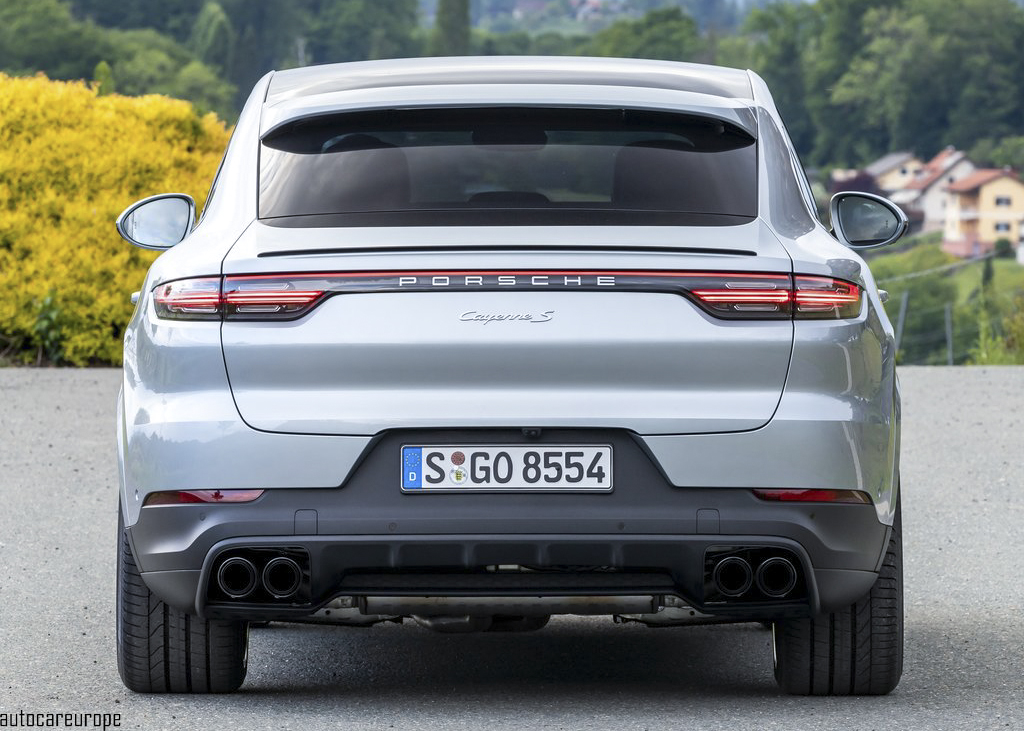
2020 Porsche Cayenne S Coupe Review


The Perfect Blend of Performance and Style: 2020 Porsche Cayenne S Coupe Review

The luxury crossover market saw a dramatic shift towards athletic, sloping rooflines, and few manufacturers executed this design direction better than Porsche. By blending the everyday utility of a midsize crossover with the aggressive silhouette of a fastback sports car, the 2020 Porsche Cayenne S Coupe emerged as one of the most compelling vehicles in its segment.

Positioned directly between the base model and the V8-powered Turbo, the 2020 Porsche Cayenne S Coupe hits the absolute sweet spot for driving enthusiasts. It delivers twin-turbocharged V6 power, razor-sharp handling, and an unmistakable road presence that turns heads wherever it goes.

1. Engine & Powertrain: Heart of a Twin-Turbocharged V6

Under the sculpted hood lies the true highlights of this athletic crossover:

  • Engine Architecture: 2.9-liter Twin-Turbocharged V6
  • Horsepower Output: 434 hp @ 5,700 – 6,600 rpm
  • Peak Torque: 405 lb-ft @ 1,800 – 5,500 rpm
  • Transmission: 8-speed Tiptronic S automatic transmission
  • Drivetrain: Active All-Wheel Drive (AWD)

Thanks to the Sport Chrono Package—which comes standard on the coupe variants—the 2020 Porsche Cayenne S Coupe launches from 0 to 60 mph in just 4.7 seconds (or 4.6 seconds with lightweight sport packages). Power delivery is immediate, with peak torque accessible right from 1,800 rpm, giving drivers effortless highway merging capabilities and crisp throttle response out of tight corners.

2. Exterior Design & Aerodynamics: A Sculpted Fastback

While it shares its underlying platform with the standard Cayenne, the 2020 Porsche Cayenne S Coupe sports distinct bodywork from the A-pillars back:

  • Rakish Roofline: The roofline sits roughly 0.78 inches lower than the standard SUV, sloping gracefully into a muscular rear fascia.
  • Adaptive Rear Spoiler: An active rear spoiler extends by 5.3 inches at speeds above 56 mph, creating additional downforce on the rear axle to enhance stability.
  • Panoramic Glass Roof: Comes standard as a fixed panoramic glass roof, flooding the cabin with natural light, though an optional contoured carbon-fiber roof is available for weight savings.

3. Driving Dynamics & Handling

Porsche’s engineering team worked tirelessly to ensure that the coupe body style lost none of the handling prowess for which the brand is legendary.

  • Porsche Active Suspension Management (PASM): Electronically adjusts damper forces based on road conditions and driving style, allowing you to switch seamlessly from plush highway cruising to firm track carving.
  • Rear-Axle Steering (Optional): Turns the rear wheels in opposition to the front wheels at low speeds for easier parking, while turning them in unison at high speeds for unflappable lane-change stability.
  • Braking Power: Equipped with massive vented steel disc brakes (or optional Porsche Surface Coated Brakes), ensuring consistent, fade-free stopping performance even under heavy thermal stress.

4. Interior Comfort, Tech & Practicality

Inside, the cabin strikes a harmonious balance between track-inspired ergonomics and modern digital luxury:

  • Porsche Advanced Cockpit: Features a central 12.3-inch HD touchscreen display for navigation, media, and vehicle settings, flanked by dual high-resolution digital displays in the instrument cluster.
  • Seating Configuration: Standard setup accommodates four passengers in a 2+2 layout with individual rear sport seats. However, a 2+1 rear seat configuration is available at no extra cost if you need room for five occupants.
  • Cargo Space: Despite the lower roofline, practical storage remains impressive:
    • 22.0 cubic feet of cargo space behind the second row.
    • 54.3 cubic feet with the rear seats folded flat.

5. Driver Assistance & Safety Tech

To support everyday usability, the vehicle features a broad array of active and passive safety technology:

  • Front and Rear ParkAssist with camera systems
  • Collision and Brake Assist
  • Lane Change Assist and Lane Keep Assist
  • Available Night Vision Assist (infrared camera detection)
  • Available Adaptive Cruise Control with stop-and-go technology

The Verdict: The Ultimate Sweet Spot in the Lineup

The 2020 Porsche Cayenne S Coupe proves that choosing a stylish fastback crossover does not mean compromising on genuine sports car performance or practical daily utility. With its 434-hp twin-turbo V6, athletic stance, and world-class chassis tuning, it remains one of the most rewarding performance crossovers on the market today.

💬 What are your thoughts on the 2020 Porsche Cayenne S Coupe? Do you prefer the sleek coupe roofline over the traditional SUV shape? Share your opinions in the comments section below!

Did you enjoy this review? Be sure to bookmark our blog and subscribe for more detailed automotive breakdowns, luxury car reviews, and performance buyer guides!